
We didn't solve Moravec's paradox, we rebranded it
Broad capabilities, brittle consistency: today's agents reason like PhDs while lacking the reliability of a toddler stacking blocks.
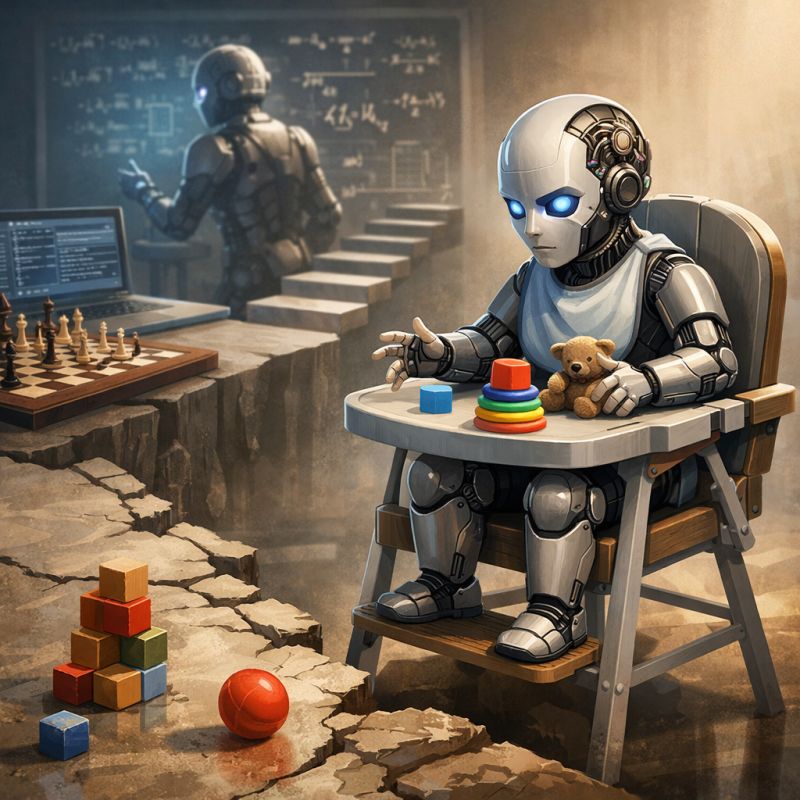
We haven’t solved Moravec’s paradox yet. We’ve rebranded it.
A one-year-old who learns that dropped objects fall will expect that outcome every time. Their world model is narrow but reliable. They don’t occasionally guess the ball might hover. LLM-based agents have the opposite profile: broad capabilities, brittle consistency. Run the same agentic workflow ten times, get seven different outcomes. Not because the task changed, but because the underlying model is probabilistic. It samples tokens, it does not reason from stable principles. An agent might successfully book your flight today and hallucinate a confirmation number tomorrow.
A 95% success rate per step sounds good. Across a 20-step workflow, that’s a 36% chance of completing without error.
But what about memory?
Yes, memory systems help. An agent that remembers your preferences is better than one that doesn’t. But there’s a difference. A toddler’s memory is constitutive: when they learn the stove is hot, that knowledge reshapes how they approach stoves. An LLM’s memory is consultative. It retrieves text about past experiences, then probabilistically decides how to use it. The agent might retrieve “this failed last time” and repeat it anyway. Memory gives agents more information. It doesn’t change how they process it.
What we actually have
Current agents can appear to reason at a PhD level while lacking the operational reliability of a toddler stacking blocks. Until we solve the consistency problem, what we have aren’t autonomous agents. They’re unreliable systems requiring constant supervision, which often takes longer than doing the task yourself.
Adjust expectations accordingly.